

Understanding Personal Injury and Employment Law

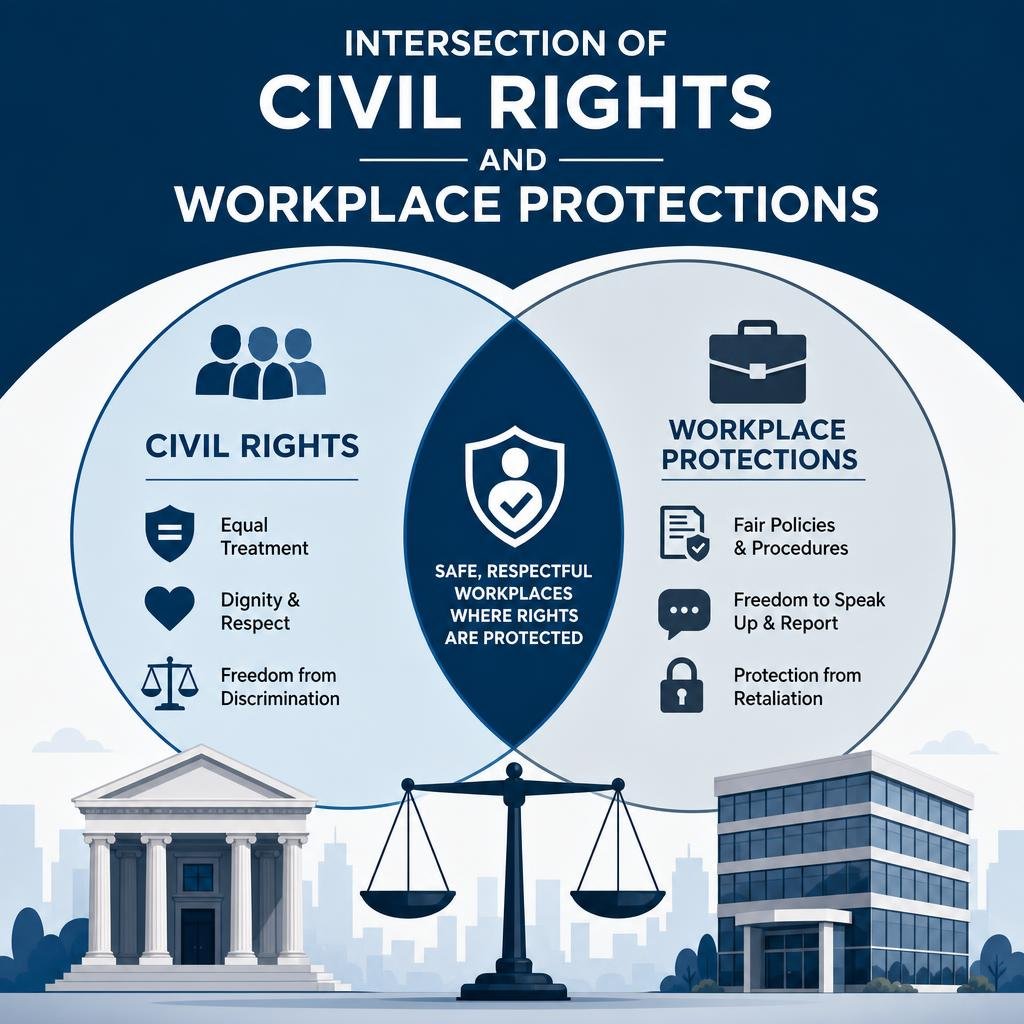
The legal landscape is vast, often divided into distinct areas like personal injury and employment law. While seemingly separate, these fields can intersect in critical ways, especially when an individual’s rights are violated in the workplace. Personal injury law typically addresses harm caused by negligence or intentional acts, leading to physical, emotional, or financial damages. Employment law, on the other hand, governs the relationship between employers and employees, covering everything from hiring and wages to discrimination and termination.
Most employment relationships in the United States operate under the “at-will” doctrine. This principle generally allows employers to terminate an employee for any reason, or no reason at all, provided it’s not an illegal one. However, this broad discretion is not absolute. Both federal and state laws, including those in Missouri and Illinois, establish crucial exceptions to at-will employment, prohibiting termination based on discriminatory factors, in retaliation for protected activities, or in violation of an employment contract. Understanding these distinctions is fundamental to discerning whether a termination crosses the line from permissible to unlawful.

Aspect Personal Injury Claims Employment Law Disputes Primary Focus Harm to an individual (physical, emotional, property) Rights and obligations in the employer-employee relationship Common Causes Accidents, medical malpractice, product defects, assault Discrimination, harassment, wrongful termination, wage disputes Legal Basis Tort law (negligence, strict liability, intentional torts) Statutory law (Title VII, ADA, ADEA, FMLA), contract law, public policy Damages Sought Medical expenses, lost wages, pain and suffering, property damage Back pay, front pay, reinstatement, emotional distress, punitive damages Key Challenge Proving causation and extent of damages Proving discriminatory/retaliatory motive, overcoming “at-will” defense Key Intersections in Personal Injury and Employment Law
The lines between personal injury and employment law can blur, particularly in situations involving workplace incidents. For instance, an employee injured on the job might pursue a workers’ compensation claim, which falls under employment law. However, if a third party’s negligence contributed to the injury, a personal injury claim against that third party might also be viable.
A significant intersection arises with retaliatory discharge claims. An employee who reports unsafe working conditions, files a workers’ compensation claim, or blows the whistle on illegal activities might face termination. If this termination is a direct result of their protected action, it constitutes retaliatory discharge. This employment law violation can also stem from a personal injury event or a concern for workplace safety. For example, an employee fired for reporting workplace safety violations to OSHA, or terminated after filing a workers’ compensation claim, would be pursuing a claim rooted in this intersection. These scenarios highlight how an employer’s actions following an injury or safety concern can give rise to distinct legal challenges that blend elements of both personal injury and employment law.
How a Wrongfully Fired Attorney Navigates Personal Injury and Employment Law
When an attorney finds themselves on the receiving end of an alleged wrongful termination, the situation is uniquely complex. As legal professionals, we are bound by stringent ethical obligations and professional responsibilities, including duties of confidentiality, loyalty, and candor. These duties can significantly impact how a wrongfully fired attorney approaches their own claim.
For an attorney who has been unlawfully terminated, understanding these interwoven legal areas is crucial. They must navigate not only the general principles of employment law but also the specific rules governing their profession. This often involves a delicate balance: asserting their rights as employees while upholding their ethical duties as lawyers. For comprehensive guidance on such matters, particularly for those who believe they were unjustly dismissed, exploring resources dedicated to the specific challenges faced by a Wrongfully Fired Attorney can be invaluable. This includes carefully documenting ethical concerns, communications regarding potential violations, and instances where they were pressured to violate professional standards. The ability to claim breach of contract against a law firm for termination resulting from insistence on compliance with professional ethics rules underscores that the employment relationship for attorneys carries implied obligations that can override standard at-will employment.
Retaliatory Discharge and the Dilemma of the Wrongfully Fired Attorney
Retaliatory discharge is a common-law concept that serves as a critical exception to the at-will employment doctrine. It occurs when an employer terminates an employee for engaging in a legally protected activity, such as reporting illegal conduct, refusing to participate in unlawful acts, or exercising a statutory right. For attorneys, this concept introduces a profound dilemma: how to uphold their professional ethical obligations without jeopardizing their careers.

The public policy exception to at-will employment is designed to protect employees who “do the right thing,” even if it goes against their employer’s interests. However, when the employee is an attorney, the situation is complicated by the Rules of Professional Conduct, which mandate certain behaviors and reporting requirements. This creates a tension between an attorney’s duty to the justice system and their right to pursue a claim if they are fired for fulfilling that duty. The question then becomes: do the ethical rules themselves provide sufficient protection for the public policy at stake, precluding a tort claim for retaliatory discharge?
The Legal Framework in Missouri and Illinois
Under Missouri and Illinois law, the general principle of at-will employment allows an employer to terminate an employee without cause, unless the termination violates a specific statute, an employment contract, or a clear mandate of public policy. Both states recognize exceptions, but their application to attorneys differs significantly.
In Missouri, the public policy exception to the at-will doctrine is narrowly construed, typically protecting employees who are fired for refusing to violate the law, reporting illegal activity (whistleblowing), or participating in an investigation. While these protections generally extend to all employees, the specific implications for attorneys can be nuanced, often requiring a direct link between the protected activity and a clearly articulated public policy.
Illinois, however, presents a more restrictive landscape for attorneys seeking to claim retaliatory discharge against their law firm employers. The Illinois Supreme Court’s decision in Jacobson v. Knepper & Moga established a significant precedent. In that case, the court held that an associate attorney could not maintain a common-law retaliatory discharge claim against their law firm, even if they were fired for reporting the firm’s alleged illegal debt-collection practices. The court reasoned that the Illinois Rules of Professional Conduct, particularly the mandatory reporting requirements under Rule 8.3, already provide adequate safeguards to protect the public policy implicated. This means that, for attorneys in Illinois, their ethical duties serve as the primary mechanism for upholding public policy, potentially negating the need for a tort remedy such as retaliatory discharge. This ruling effectively extends the reasoning from cases involving in-house counsel to attorneys employed by law firms, creating a distinct legal hurdle for lawyers in the state.
Balancing Ethical Duties with Retaliatory Claims
The tension between an attorney’s ethical duties and their ability to pursue a retaliatory discharge claim is one of the most contentious areas in employment law for legal professionals. Central to this conflict is the attorney’s unwavering duty of client confidentiality, typically enshrined in Rule 1.6 of the Rules of Professional Conduct.
In some jurisdictions, courts have recognized the unique position of attorneys, particularly in-house counsel, who often have only one “client”—their employer. The Tennessee Supreme Court, in its landmark decision in IN THE SUPREME COURT OF TENNESSEE AT JACKSON (Crews v. Buckman Laboratories), acknowledged that in-house counsel face significant economic pressures that could tempt them to compromise their ethical standards. The court ruled that in-house lawyers may pursue common-law retaliatory discharge claims when terminated for complying with mandatory ethical rules that represent a clear public policy. Crucially, the court emphasized that such claims must be pursued while strictly minimizing the disclosure of confidential client information, often through protective orders or in camera review. This approach recognizes that relying solely on ethical rules might be insufficient to protect public policy, as economic pressures can lead lawyers to subordinate ethics.
Conversely, other states have taken a more conservative stance. As discussed, Illinois courts, as seen in Jacobson v. Knepper & Moga, have held that the Rules of Professional Conduct themselves provide adequate protection of public policy, thus precluding a tort claim for retaliatory discharge against attorneys. This perspective suggests that the ethical framework is sufficient to encourage attorneys to report misconduct, even at the risk of their employment. Similarly, in Washington state, the court in Weiss v. Lonnquist held that an attorney could not maintain a wrongful termination claim under public policy because the state bar’s disciplinary system provided an adequate alternative remedy to uphold the public policy of attorney candor.
This divergence in judicial opinion highlights the profound challenge attorneys face. While we are obligated to report misconduct and uphold the law, doing so can place our livelihoods at risk. The path to justice for a wrongfully terminated attorney often involves navigating these complex ethical and legal considerations, ensuring that any claim is brought in a manner that respects the sanctity of client confidentiality while still allowing for a full and fair adjudication of the alleged wrongful termination.
Landmark Precedents Shaping Attorney Wrongful Termination
The legal landscape concerning attorneys and wrongful termination has been significantly shaped by several landmark cases that grapple with the unique intersection of employment law, professional ethics, and public policy. These cases establish critical precedents, defining when and how an attorney can seek redress for unlawful dismissal.
One pivotal case is HOWARD L. WIEDER, APPELLANT, v. MURRAY L. SKALA, ET AL., RESPONDENTS, AND LARRY A. LUBIN, DEFENDANT. (Wieder v. Skala) from New York. This case established that an attorney can claim breach of contract against a law firm for termination resulting from the law firm’s insistence on compliance with professional ethics rules. The court reasoned that the employment relationship between a law firm and an associate attorney imposes an obligation to follow ethical standards, including the duty to report professional misconduct under DR 1-103(A). This implied obligation, rooted in the very nature of the legal profession, can override standard at-will employment rules, creating a contractual basis for a wrongful discharge claim. Wieder underscored that the ethical duties of lawyers are not merely aspirational but form an integral part of their employment agreement within a law firm.
In contrast, the Washington State case of Weiss v. Lonnquist (Weiss v. Lonnquist, 293 P.3d 1264 (Wash. App. 2013)) – vLex United States presented a different outcome. Here, an attorney was terminated after refusing to work on a case she believed involved client perjury and ethical violations by a supervising attorney. The court ultimately held that a civil wrongful discharge action under public policy was unavailable because the Washington State Bar Association’s disciplinary system provided an adequate alternative remedy to vindicate the public policy of attorney candor with the courts. This ruling highlights the “adequate alternative remedy” doctrine, which can preclude common-law tort claims if a statutory or administrative mechanism already exists to address the public policy at issue. The Weiss decision suggests that in some jurisdictions, the attorney disciplinary process is seen as the primary and sufficient avenue for addressing ethical breaches, even when they lead to an attorney’s termination.
These cases, alongside Jacobson v. Knepper & Moga and Crews v. Buckman Laboratories, illustrate the complex and often conflicting approaches courts take when balancing an attorney’s employment rights against their professional obligations and the public interest. They underscore that the common law of wrongful termination, when applied to attorneys, is far from uniform and is heavily influenced by state-specific interpretations of public policy, ethical rules, and the role of the bar disciplinary system.
Proving a Retaliatory Discharge Claim
For an attorney pursuing a retaliatory discharge claim, the burden of proof rests on demonstrating that their protected activity was the primary reason for their termination. This can be challenging, as employers often provide “pretextual” reasons for dismissal—ostensibly legitimate, non-discriminatory reasons that mask an unlawful motive.
To succeed, an attorney must typically prove several key elements:
- Engagement in Protected Activity: The attorney engaged in an activity protected by law or public policy (e.g., reporting a violation of the Rules of Professional Conduct, refusing to engage in an illegal act, or advocating for a client’s rights in an ethically sound manner).
- Adverse Employment Action: The employer took an adverse action against the attorney (e.g., termination, demotion, significant reduction in responsibilities).
- Causal Connection: There was a causal link between the protected activity and the adverse employment action. This is often the most difficult element to prove, requiring compelling evidence that the employer’s stated reason for termination was a pretext.
Given that direct evidence of retaliatory intent is rare, attorneys often rely on circumstantial evidence. This can include:
- Temporal proximity: The termination occurred shortly after the protected activity.
- Disparate treatment: Other employees who did not engage in protected activity were treated more favorably.
- Inconsistent explanations: The employer’s reasons for termination changed over time or were inconsistent.
- Documentation: Thorough records of the protected activity and the employer’s response are crucial.
If successful, an attorney may be entitled to various remedies and damages. These can include:
- Back pay: Compensation for lost wages and benefits from the date of termination to the date of judgment.
- Front pay: Compensation for future lost wages and benefits if reinstatement is not feasible.
- Reinstatement: Returning to their former position.
- Compensatory damages: For emotional distress, reputational harm, and other non-economic losses.
- Punitive damages: In cases where the employer’s conduct was particularly egregious.
- Attorney’s fees and costs: Reimbursement for legal expenses.
Statistics underscore the prevalence of retaliation claims. In 2021, the EEOC reported receiving over 20,000 retaliation charges, making it the most common type of discrimination charge filed. That same year, the EEOC resolved more than 1,000 retaliation lawsuits, recovering an impressive $60 million in monetary benefits for victims. These figures highlight the significant impact of workplace retaliation and the potential for substantial remedies for those who successfully prove their claims.
Frequently Asked Questions About Wrongful Termination and Employment Law
Navigating the complexities of employment law, especially when facing an alleged wrongful termination, can raise many questions. Here, we address some common inquiries to help clarify legal rights and the steps involved in employment disputes.
What constitutes wrongful termination for an attorney under Missouri and Illinois law?
Under general employment-at-will principles in both Missouri and Illinois, an employer can typically terminate an employee for any reason, or for no reason at all, as long as the reason is not illegal. However, when the employee is a licensed attorney, the legal landscape becomes highly complex.
In Missouri, the public policy exception to the at-will doctrine protects employees who are fired for refusing to violate the law, reporting illegal activity (whistleblowing), or participating in an investigation. However, Missouri courts strictly construe these exceptions.
In Illinois, the tort of retaliatory discharge is similarly limited. In the landmark case Jacobson v. Knepper & Moga, the Illinois Supreme Court established a strict barrier for attorney-employees. The court ruled that an associate attorney cannot maintain a common-law retaliatory discharge claim against their law firm employer. The court reasoned that the Illinois Rules of Professional Conduct (specifically the mandatory reporting requirements of Rule 8.3) already provide adequate safeguards to protect public policy, making the tort remedy unnecessary for lawyers. This creates a stark contrast between general employees—who can sue for retaliatory discharge when fired for reporting illegal acts—and attorneys, who are expected to uphold their ethical duties regardless of the economic consequences of termination.
How can a wrongfully terminated employee in Little Rock, Arkansas, find the right legal representation?
For individuals facing wrongful termination or workplace retaliation in Little Rock, Arkansas, navigating the state’s strict at-will employment laws requires highly specialized legal counsel. Arkansas adheres closely to the at-will doctrine, meaning a terminated worker must prove their discharge violated a well-established public policy of the state, breached an employment contract, or violated federal anti-discrimination laws (such as Title VII of the Civil Rights Act or the ADA).
To find the right legal representation in Pulaski County, terminated employees should take the following steps:
- Seek Local Expertise: Look for attorneys who specialize specifically in Arkansas employment law and are familiar with the local federal courts in the Eastern District of Arkansas, as well as state courts in Little Rock. Resources like Best Little Rock, AR Wrongful Termination Attorneys | Super Lawyers and Best Employment Lawyers in Pulaski County, AR – Justia can be excellent starting points.
- Verify Track Records: Ensure the attorney has experience handling retaliation and wrongful discharge claims, as these cases heavily rely on proving “pretext”—showing that the employer’s stated reason for termination was a cover-up for an illegal motive. Firms like Arkansas Wrongful Termination Attorney – Morgan & Morgan often highlight their experience in this area.
- Utilize Local Resources: Consult the Arkansas Bar Association or local legal directories to identify board-certified or highly rated employment law practitioners in the Little Rock metro area. The County Attorney’s Office – Pulaski County may also offer public resources or referrals.
- Act Promptly: Arkansas, like other states, has strict statutes of limitations for filing claims. While specific deadlines vary depending on the nature of the claim (e.g., federal discrimination charges often require filing with the EEOC within 180 days), it is always advisable to seek legal counsel immediately to assess your case and ensure timely action.
How do courts balance an attorney’s ethical duty of confidentiality with their right to sue for wrongful termination?
Courts across the United States are deeply divided on how to balance an attorney’s ethical obligations—particularly the duty of client confidentiality under Rule 1.6 of the Rules of Professional Conduct—with their ability to pursue a retaliatory discharge claim.
In jurisdictions like Tennessee, as established in Crews v. Buckman Laboratories, courts recognize that in-house counsel face unique economic pressures because they have only one client (their employer). The Tennessee Supreme Court ruled that in-house lawyers may bring common-law retaliatory discharge claims when terminated for complying with mandatory ethical rules, provided they do so while strictly minimizing the disclosure of confidential client information. The court found that economic pressures on in-house counsel could lead to violations, and thus, judicial recourse strengthens compliance with ethical duties.
Conversely, other jurisdictions severely restrict these claims. In Washington, the court in Weiss v. Lonnquist held that an attorney could not maintain a wrongful termination claim under public policy because the state bar’s disciplinary system provided an adequate alternative remedy to vindicate the public policy of attorney candor.
To protect client confidentiality while gathering evidence for a claim, a terminated attorney must:
- Only disclose confidential information to the extent reasonably necessary to establish their claim.
- Utilize protective orders, in camera judicial reviews, and sealed filings to prevent sensitive client data from becoming part of the public record.
- Distinguish between the employer’s internal business operations and protected attorney-client communications, ensuring that only the latter are shielded.
Conclusion
The journey for a wrongfully fired attorney is often fraught with unique challenges, blending the complexities of employment law with the stringent demands of professional ethics. From navigating the at-will employment doctrine to balancing client confidentiality with personal claims, the path to justice requires a deep understanding of legal principles and a strategic approach.
As we have explored, landmark cases and state-specific laws create a diverse legal landscape, offering varying degrees of protection and avenues for redress. Whether through common-law exceptions, contractual obligations, or statutory protections, the legal system continuously evolves to address the dilemmas faced by attorneys who prioritize their ethical duties.
Dedicated legal advocacy remains paramount. For attorneys unjustly terminated, understanding their rights and the intricate legal framework is the first step toward securing justice, upholding professional integrity, and protecting their careers. We are committed to shedding light on these critical issues, reinforcing the principle that even those who serve the law deserve its full protection.