

Facing a criminal charge involving a firearm is a pivotal moment that threatens your freedom, your reputation, and your future. For many Virginia residents and visitors, the anxiety surrounding these allegations is compounded by a sense of confusion regarding the state’s political and legal environment. Following the recent Blue Sweep in the elections, many Virginians are expressing concern over potential tightening of enforcement and new legislative hurdles. This political shift has created an atmosphere where gun owners fear that what was considered standard practice yesterday could be scrutinized by prosecutors today.
Ignorance of these shifting statutes is rarely accepted as a valid defense in a court of law. Whether you are dealing with a misunderstanding regarding a concealed carry permit or facing serious allegations of brandishing, the consequences of a conviction are permanent. This guide outlines the specific risks you face in 2026, distinguishes between state and federal exposures, and explains the necessary steps to build a robust legal defense in this volatile environment.
Navigating Virginia’s Shifting Firearm Legislation in 2026
The political landscape in Virginia has undergone significant changes that directly impact how firearm laws are interpreted and enforced. With Democrats securing control of the General Assembly and the Governor’s mansion under Governor-elect Spanberger, legislative priorities are expected to shift heavily toward stricter gun violence prevention measures. Advocacy groups have signaled that the sky is the limit for new legislation in the upcoming sessions, including potential bans on assault weapons and stricter storage mandates. This political reality means that prosecutors may feel increased pressure to pursue firearm convictions aggressively.
One of the most confusing areas for gun owners in 2026 involves background checks for private sales. A distinct legal tug-of-war has emerged following a circuit court ruling that declared the state’s Universal Background Check (UBC) law unconstitutional. However, Attorney General-elect Jay Jones has taken steps to appeal this decision, seeking an extension to file an appeal in early 2026. This legal limbo creates a trap for well-meaning gun owners who may believe the law has been struck down, only to find the state aggressively litigating to reinstate it. Relying on headlines rather than legal counsel regarding private transfers can lead to severe criminal exposure.
Furthermore, law enforcement agencies are intensifying their focus on non-traditional firearms, specifically Ghost Guns or privately manufactured firearms. Recoveries of these weapons have surged by nearly 1,600% in recent years, driving police to search vehicles and question owners more rigorously during routine stops. If you are found in possession of a firearm that lacks a serial number or does not comply with new manufacturing definitions, you could face immediate arrest.
Visualizing the Surge in Enforcement
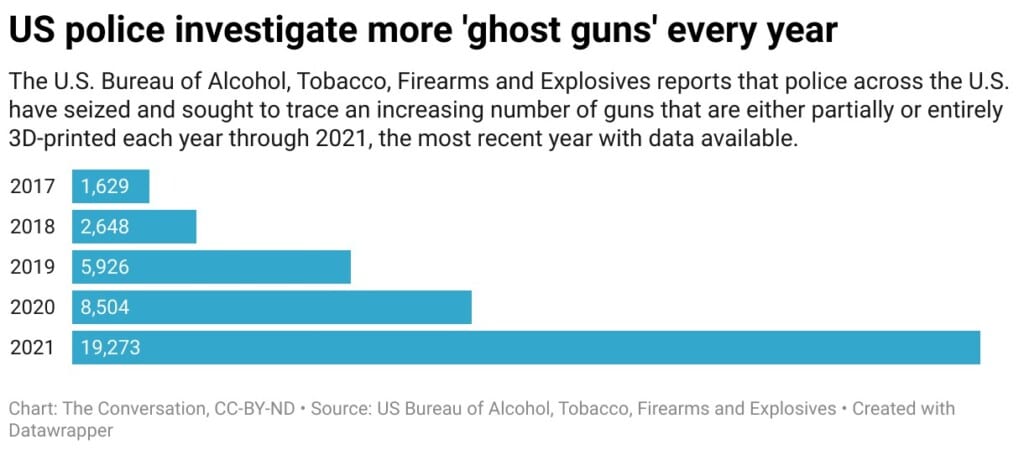
This data highlights why officers are increasingly vigilant during traffic stops, often leading to charges for otherwise law-abiding citizens.
Distinguishing Between Misdemeanors and Felony Firearm Offenses
Many individuals charged with gun crimes are shocked to learn how quickly a perceived minor infraction can escalate into a felony. Understanding the classification of your charge is the first step in determining your defense strategy. In Virginia, a Class 1 misdemeanor, such as a first offense for carrying a concealed handgun without a permit, is serious but distinct from felony charges. A misdemeanor conviction can result in up to 12 months in jail and a fine of up to $2,500, along with a criminal record that can affect employment.
However, the stakes rise dramatically with repeat offenses or aggravating factors. A second concealed carry offense becomes a Class 6 felony, and a third becomes a Class 5 felony. Felony convictions strip you of your civil rights, including the right to vote and the right to own or possess firearms in the future. Charges involving brandishing a firearm near a school or reckless handling that results in injury also carry felony weight. The table below outlines common charges and their potential escalations.
| Offense Name | Classification | Potential Max Penalty | Key Factor |
|---|---|---|---|
| Concealed Carry (1st Offense) | Class 1 Misdemeanor | 12 Months Jail / $2,500 Fine | Lack of a valid permit (CHP) |
| Concealed Carry (2nd Offense) | Class 6 Felony | 1-5 Years Prison | Prior conviction on record |
| Brandishing a Firearm | Class 1 Misdemeanor (Standard) / Class 6 Felony (School Zone) | 12 Months Jail (Standard) / 5 Years Prison (School) | Location (near school property) |
| Possession by Convicted Felon | Class 6 Felony | Mandatory Minimums apply (2 or 5 years) | Prior felony status (violent vs. non-violent) |
| Use of a Firearm in the Commission of a Felony | Unclassified Felony | 3 Years (1st Offense) / 5 Years (2nd Offense) | Sentence runs consecutively (added to other time) |
The Intersection of State and Federal Firearm Statutes
A common misconception is that a firearm charge is purely a local matter handled at the county courthouse. However, Virginia’s laws often overlap with federal statutes, creating a risk of dual sovereignty where a defendant can theoretically face prosecution from both state and federal governments. Federal prosecutors have become increasingly active in recent years; federal weapons convictions rose by 21% compared to five years prior, signaling a clear shift in enforcement priorities.
The consequences of federal involvement are severe. Under 18 U.S.C. § 922(g), being a prohibited person (such as a convicted felon) in possession of a firearm carries extreme penalties. Violators of this statute can face up to 10 years in federal prison, and there is no parole in the federal system. This applies even if the firearm was never used in a crime; simple possession is sufficient for a conviction.
Furthermore, Virginia and federal laws both utilize mandatory minimum sentences that remove judicial discretion. For instance, using or carrying a firearm during a violent crime or drug trafficking offense carries a mandatory minimum of 5 years. Crucially, these sentences run consecutively, meaning the prison time is added on top of any sentence received for the underlying crime, rather than served at the same time. This structural reality makes it imperative to have legal counsel who understands how to navigate these concurrent risks. For more on how these legal frameworks operate to protect the accused, read about the role of criminal defense in safeguarding individual rights.
Understanding Brandishing and Reckless Handling Allegations
Two of the most frequently charged offenses in Virginia are Brandishing and Reckless Handling. These statutes often rely on subjective interpretations of an event, making them difficult to defend without a clear strategy. Under Virginia Code § 18.2-282, brandishing does not necessarily require pointing a gun at someone. The statute criminalizes holding a firearm in a manner that reasonably induces fear in another person. This relies heavily on the perception of the accuser and the context of the situation.
Reckless handling (VA Code § 18.2-56.1) involves handling a firearm in a way that endangers life, limb, or property. This can range from leaving a loaded gun accessible to a child to hunting accidents. While Virginia observes Stand Your Ground laws—meaning you do not have a duty to retreat before using force if you are not at fault—the force used must be proportional to the threat. Prosecutors often argue that displaying a weapon during a verbal argument was a disproportionate escalation, turning a self-defense claim into a brandishing charge.
Actions That Can Be Interpreted as Brandishing
- Lifting a shirt to reveal a holstered weapon: During a heated argument, this gesture can be viewed as an implied threat to use the weapon, even if the gun is never touched.
- Holding a firearm at low ready: Even if the muzzle is pointed at the ground, holding a rifle or pistol in a tactical position during a dispute with neighbors or in a public parking lot can induce reasonable fear.
- Pointing a laser sight: Directing a laser attached to a firearm at an individual constitutes brandishing, as it implies the weapon is aimed and ready to fire.
- Verbal threats accompanied by gestures: Stating I have a gun while patting a pocket or reaching toward a waistband can be sufficient for an arrest, depending on the witness testimony.
The Critical Role of a Gun Charges Lawyer in Your Defense
When facing the complexities of Virginia’s firearm statutes, specifically in the Hampton Roads area and beyond, securing experienced legal counsel is not optional—it is a necessity. A dedicated gun charges lawyer serves as your primary barrier against the aggressive enforcement tactics used by state and federal prosecutors. Firms like Welch & Wright, PLLC, are critical resources for gun owners, offering a thorough knowledge of the specific tendencies of local General District and Circuit Courts.
One of the distinct advantages of working with Welch & Wright, PLLC is its dual capability in both state and federal litigation. With 15.1% of all federal defendants now charged with firearms offenses, having an attorney who can seamlessly transition between state negotiations and federal defense is critical. A lawyer who only understands local traffic court may be ill-equipped to handle the mandatory minimums and sentencing guidelines of a federal weapons indictment.
Beyond defense against active charges, long-term legal strategy often involves the Restoration of Rights. In Virginia, a simple expungement is rarely enough for firearm privileges. The process typically requires a specific Governor’s pardon followed by a petition to the Circuit Court. Navigating this bureaucratic roadmap requires a firm that understands the administrative nuances of the Secretary of the Commonwealth’s office as well as the procedural requirements of the local courts. Whether you are fighting a brandishing allegation or seeking to restore your Second Amendment rights, effective counsel ensures that one mistake does not permanently define your future.
Protecting Your Constitutional Rights and Your Future
The legal environment for gun owners in Virginia is becoming increasingly complex. With lawmakers poised to introduce new restrictions in the 2026 General Assembly session, prosecutors are under immense pressure to secure convictions on weapons charges. The result is a system where leniency is rare, and the consequences of a conviction—ranging from mandatory prison time to a lifetime ban on firearm ownership—are severe.
You cannot afford to face these risks alone. A conviction leads to a permanent loss of rights that affects your ability to protect your home and your family. Navigating these complex statutes requires experienced legal counsel who can scrutinize the evidence, challenge unlawful searches, and articulate a strong defense. If you are facing charges, contact Welch & Wright, PLLC for a consultation to discuss your specific circumstances and begin building your defense.
The information provided in this material is for general information only and is not legal advice. No attorney-client relationship will result y reading or interacting with this content. Contact an attorney for advice on specific legal issues.