

Table of Contents
- Maintain a Safe Following Distance
- Avoid Truck Blind Spots
- Pass with Caution
- Be Aware of Wide Turns
- Adjust for Weather Conditions
- Stay Alert and Avoid Distractions
- Use Defensive Driving Techniques
- Conclusion
Sharing the road with large trucks is part of everyday life for drivers across the country. Safely navigating around these massive vehicles demands heightened awareness and specific strategies. Knowing how to drive responsibly next to trucks is key to reducing accident risk and protecting everyone on the road. When unexpected incidents occur, consulting with a Nashville Truck Accident Lawyer can guide you through your options, but prevention is always the best approach. Large trucks have unique limitations, including longer stopping distances, wider turning radii, and sizable blind spots. By understanding these challenges, regular motorists can dramatically lower the risk of serious collisions. Defensive driving, patience, and attentiveness go a long way in safeguarding lives when sharing highways and city streets with trucks.
Maintain a Safe Following Distance
Large trucks weigh much more than standard vehicles, making it harder for them to stop quickly. Always allow at least a four-second gap between your car and the back of a truck when traveling at lower speeds. If your speed climbs above 40 mph, add another second to that cushion for every additional 10 mph. This space gives you and the truck driver enough time to react if traffic suddenly stops or obstacles appear on the road. Stopping distances can also be influenced by road conditions, vehicle weight, and load type. A rear-end collision between passenger vehicles and large trucks is common, often due to following too closely. Keeping a safe distance is a simple, effective habit that saves lives.
Avoid Truck Blind Spots
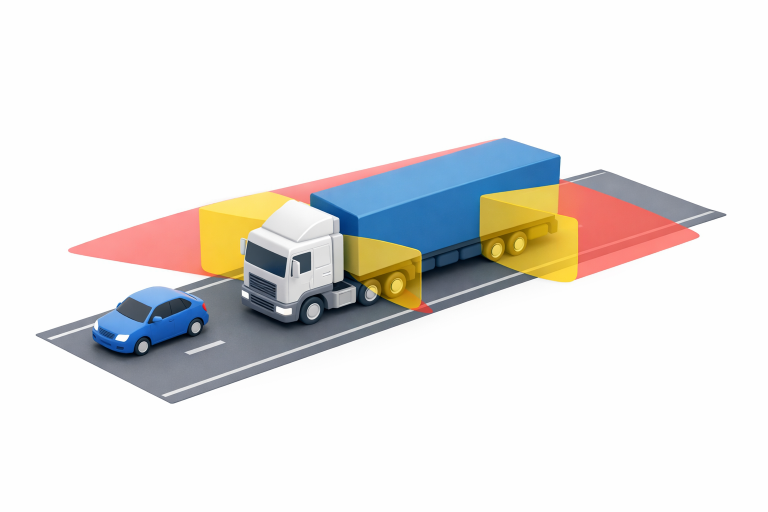
Large trucks have sizable areas where their drivers have limited or zero visibility. These “No Zones” are typically located directly in front of and behind the truck, and along each side (especially the right side). A good rule to remember: if you cannot see the truck driver’s face in their side mirror, they cannot see your vehicle. Staying out of these blind spots is crucial, as lingering there increases the risk of side-swipe or rear-end accidents, particularly if the truck needs to change lanes or stop unexpectedly.
Pass with Caution
Passing a truck safely requires strategy and patience. Always pass on the left whenever possible since the truck driver’s visibility is better on that side. Use your signal well in advance and commit to a steady passing speed. When you have cleared the truck, ensure you can see the entire front of the vehicle in your rearview mirror before moving back into the lane. Avoid returning too closely in front of a truck; they need more distance to slow down or stop, and a sudden lane change can leave you vulnerable to being rear-ended by such a heavy vehicle.
Be Aware of Wide Turns
Trucks often make wider turns than most motorists anticipate. Right turns, in particular, may require the truck to swing left before turning right. Never try to squeeze between a turning truck and a curb or attempt to cut inside their turning path. Always provide trucks with the physical space they need to complete their turns safely, even if it means waiting a few more seconds at an intersection.
Adjust for Weather Conditions
Inclement weather, including rain, snow, and fog, can greatly diminish a truck’s ability to maneuver and stop. Wet or icy roads further increase stopping distances and the risk of skidding. During poor weather, lower your vehicle speed, increase the distance between you and trucks, and use extra caution when changing lanes or merging. Trucks may experience reduced traction and poor visibility, making them more prone to sudden shifts or struggles in traffic flow. Anticipate their needs and take additional steps to stay visible and predictable.
Stay Alert and Avoid Distractions
Distracted driving poses a risk to everyone, but it can be especially dangerous when navigating near large trucks. Put away mobile devices, avoid eating while driving, and keep conversations or entertainment in the car to a minimum. Roadway conditions change rapidly, and you need to be ready to respond quickly. An alert, distraction-free mindset allows you to spot trucks’ signals, anticipate lane changes, and react to potential hazards in real time.
Use Defensive Driving Techniques
Defensive driving is about staying prepared for the unexpected. Pay attention to a truck’s behavior and make note of signals such as turn indicators, brake lights, or sudden speed adjustments. Take special care in high-risk areas, such as intersections and freeway entrances, where trucks may need extra time and space to navigate. Always have an escape plan in mind so that if a truck suddenly moves into your lane or brakes hard, you can react and find a safe route away from danger.
Conclusion
Taking smart precautions when sharing the road with large trucks is essential for every driver. Maintaining safe distances, avoiding blind spots, using extra care when passing, and staying alert can prevent the most common and dangerous types of collisions. A proactive and respectful driving attitude goes a long way toward making roadways safer for everyone. The next time you pass a truck, remember these strategies and be part of the solution in keeping our highways and streets as safe as possible.