

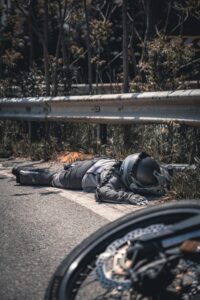
Most riders put more thought into their helmet brand than into what happens in the sixty minutes after a crash. That gap costs people money, evidence, and sometimes their case. This piece closes it. You’ll get the riding conditions that actually hurt South Carolina riders, the gear choices that matter most, and a step-by-step playbook for the first hour after a collision so you’re never scrambling. I’ve talked to enough riders who learned this the hard way to know the order matters.
Why South Carolina Riders Face a Different Kind of Risk
South Carolina is a great state for riding. Long coastal stretches, quiet upstate backroads, mild winters that let you ride almost year round. That’s the upside. The downside is a mix of road conditions and driver habits that make certain months genuinely dangerous. According to the National Highway Traffic Safety Administration, motorcyclists are overrepresented in fatal traffic crashes relative to how many miles they ride. That’s not a scare tactic. It’s the baseline reality of riding a vehicle with no crumple zone and a driver population that often isn’t looking for you.
Here in Aiken County, you’ve got a specific cocktail: horse country roads with blind curves, heavy truck traffic on the corridors heading toward Augusta, and a growing number of out-of-state drivers who don’t know where the deer cross at dusk. I’d take a crowded city street over a foggy two-lane at 6 a.m. any day. At least on the city street, everyone expects to see someone.
The Gear Decisions That Actually Change Outcomes
Riders argue about gear the way people argue about barbecue sauce. Let me cut through it with what I’d actually pick if I were gearing up tomorrow.
- Helmet: A full-face helmet with a proper safety rating. Not a novelty half-shell.
- Jacket and gloves: Abrasion-resistant material, not a hoodie. Your hands hit the pavement first more often than you’d think.
- Boots: Over-the-ankle, with a real sole. Sneakers come off. Ankles don’t forgive.
- Visibility: A bright or reflective layer, plus a headlight you actually run during the day.
The Insurance Institute for Highway Safety has spent decades documenting how helmet design and use affect rider outcomes, and the pattern hasn’t moved. Gear isn’t about looking serious. It’s about the five seconds after impact, which you don’t get to rehearse.
Here’s my honest take: if you’re choosing between upgrading your exhaust and upgrading your helmet, the helmet wins every time. Nobody ever regretted that trade.
Riding Conditions That Catch SC Riders Off Guard
Most crashes aren’t freak events. They cluster around predictable situations. Watch for these, especially on familiar roads where you’ve stopped paying attention.
Left-turn collisions at intersections. A driver turning left across your path is one of the most common motorcycle crash patterns in the country. Assume they don’t see you until you’ve made eye contact.
Gravel and sand in curves. Rural Aiken County roads shed material onto the pavement after storms. That thin layer in a curve will put you down faster than any speed will.
Deer at dawn and dusk. You’ll know the spots. Everyone who rides out here has a story about the one that came out of nowhere.
Rear-end risk at stoplights. Keep an eye on your mirrors when you’re stopped and leave yourself an escape lane. This one’s cheap insurance.
A First-Hour Playbook for After a Crash
This is the part most riders never think about until they need it. Print it, screenshot it, whatever works. The first hour after a collision shapes everything that follows.
- Get out of traffic if you can, and don’t move if you can’t. Secondary impacts hurt more people than the first one. If you’re down in a lane, stay still unless you’re in immediate danger.
- Call 911 and ask for a police report. That report is the backbone of any claim that comes later. No report, no clean record of what happened.
- Photograph everything. Your bike, the other vehicle, the road surface, the light, the weather, the position of the vehicles before anyone moves them. More photos are almost always better.
- Get medical attention the same day. Adrenaline hides injuries. A same-day exam creates a documented link between the crash and what you’re feeling a week later.
- Collect names and insurance info, and stay off social media. Anything you post can be pulled into a claim against you. I’ve seen it happen more than once.
- Don’t negotiate with an insurance adjuster on the phone. Early offers are calibrated to close fast, before you know the full scope of your injuries or repairs.
- Talk to someone who handles these cases before you sign anything. Even a short conversation can save you from a decision you can’t undo.
When You Should Stop Handling It Alone
Plenty of minor crashes resolve without drama. Someone backs into your parked bike in a parking lot, you swap insurance, it’s done. No need to make it complicated. It gets complicated when there’s an injury, a disputed liability question, an uninsured driver, or a commercial vehicle involved. Those four situations are where the paperwork stops being friendly.
If you’re comparing options in the area, it helps to understand how motorcycle accident claims in Aiken, SC actually get built: the police report, the medical records, the property damage documentation, and the reconstruction of how the impact happened. A local firm already knows the roads, the adjusters, and the courthouse. That familiarity matters more than people expect.
You don’t have to decide the moment you leave the scene. But don’t wait until an insurer has already shaped the story.
What Most Riders Get Wrong About Preparation
Riders prepare for the wrong thing. They prepare for the ride. They memorize the route, check the tire pressure, watch the forecast, and never once think about what happens after a crash.
There’s a simpler way to think about it. I call it the Ride, React, Record rule, three phases you should be able to run in your head without notes. Ride is your pre-ride checklist: gear, bike condition, route awareness, and an honest read on how tired you are. React is your instinct training, knowing to brake in a curve before you enter it and to scan intersections twice. Record is your post-crash behavior, the photos, the report, the same-day doctor visit, the refusal to sign anything early.
Most people nail Ride and skip Record entirely. Record is the phase that protects your finances, your health, and your ability to make a claim if you need one.
One more piece of tested advice: keep a small card in your jacket with your emergency contact, your blood type, any medications, and the name of a lawyer you’d call. That card takes ten minutes to make. It only has to work once.
Riding in South Carolina is worth it. The backroads, the coast, the long Sunday loops, all of it. Doing it with a plan for the bad day means you get to keep enjoying the good ones. So the question isn’t whether you love riding. It’s whether you’ve thought past the crash.