
Key Takeaways
- Major federal actions and enforcement efforts have ramped up to counter Medicare and Medicaid fraud.
- Bipartisan bills are being advanced to strengthen oversight and close loopholes that have enabled fraudulent practices.
- Technological advancements, particularly in machine learning, are making fraud detection faster and more accurate.
- Community engagement is vital in helping beneficiaries recognize and report suspicious activities.
Medicare and Medicaid fraud remain a persistent challenge in the healthcare system. These fraudulent practices result in billions of dollars lost each year, undermining not only financial resources but also the quality and trust in vital government programs. Policymakers and regulatory authorities are intensifying their efforts to identify and stop fraud at every stage, leveraging both legislative action and technological innovation. If you are searching for details about reporting these schemes or seeking support as a lawyer for Medicare fraud whistleblower, staying informed on the latest developments is critical.
Medicare and Medicaid fraud schemes take many forms, including billing for services not provided, upcoding, accepting kickbacks, and using false credentials to obtain reimbursements. The federal government, states, and local communities are collaborating to ensure resources meant to support vulnerable populations benefit those who need care, not those who exploit the system for personal gain.
Legislative bodies are introducing new laws and updating existing ones to address gaps that allow fraudulent activities to persist. Powerful data analytics and machine learning techniques are now being implemented to help government agencies identify suspicious claims and trends in real time, offering unprecedented accuracy. At the community level, specialized education and volunteer initiatives are mobilizing citizens to play a hands-on role in fraud prevention and reporting. Preventing Medicare and Medicaid fraud is a complex, evolving task that requires continued vigilance and collaboration across all levels of the healthcare ecosystem. The more proactive each stakeholder becomes, the greater the protection for both public funds and patient care. For further background on the scope of fraud and examples of penalties, you can read resources like this article from the Associated Press.
Federal Actions to Combat Fraud
In early 2026, the Centers for Medicare & Medicaid Services (CMS) undertook a significant effort to curb fraudulent claims. In one high-profile case, CMS deferred $259.5 million in federal Medicaid funding to Minnesota pending the resolution of questions surrounding erroneous or potentially fraudulent billing. Additionally, CMS enacted a six-month, nationwide moratorium on the enrollment of new providers for Durable Medical Equipment, Prosthetics, Orthotics, and Supplies (DMEPOS). These decisive steps are structured to halt suspicious payments while comprehensive investigations and reviews are conducted, thereby protecting program integrity and safeguarding public funds.
Legislative Measures
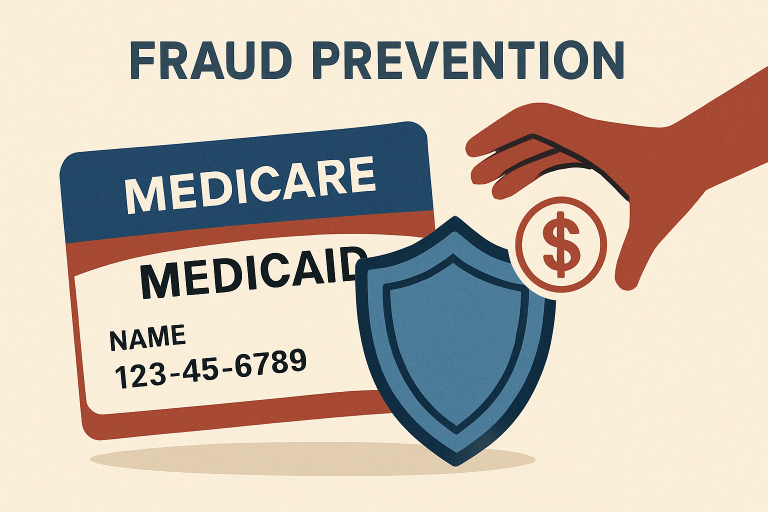
Bipartisan action in Congress has resulted in the reintroduction of the Medicare and Medicaid Fraud Prevention Act. This legislation requires all states to work proactively with the Social Security Administration, including mandatory regular cross-checks of physicians against the Death Master File before reenrolling them as Medicaid or Medicare providers. This prevents the re-use of deceased healthcare provider credentials in fraudulent billing schemes, a tactic often employed by bad actors to submit false claims. These measures are a direct response to historical weaknesses that criminal enterprises have exploited, and their mandatory implementation marks a significant advance in compliance and oversight.
Technological Advancements in Fraud Detection
Machine learning and artificial intelligence are rapidly reshaping the fight against healthcare fraud. Researchers have demonstrated that data-driven models can effectively distinguish between legitimate and fraudulent claims by analyzing vast datasets for subtle signals and patterns. For example, advanced algorithms can detect shifts in billing behavior, outlier activities among providers, and relationships within claims data that reveal previously hidden schemes. With this technology, agencies are not only catching more fraudulent claims but also doing so much earlier than with traditional methods.
In addition, predictive analytics allows investigators to flag suspicious claims before payments are even processed, reducing financial losses and preventing repeat offenses. These systems continuously learn from new data, improving their accuracy over time and adapting to evolving fraud tactics. When combined with human oversight and regulatory enforcement, artificial intelligence becomes a powerful tool that strengthens monitoring efforts and helps protect public healthcare programs from complex and large-scale fraudulent activities.
Community Involvement
Government agencies are not the only players in the battle against Medicare and Medicaid fraud. Community-based initiatives, such as the Senior Medicare Patrols (SMP), empower citizens to be vigilant participants in fraud prevention. SMP trains thousands of volunteers every year to provide education and outreach, helping elderly beneficiaries understand deceptive schemes, scrutinize their medical bills, and report anomalies before larger losses occur. Local educational seminars, hotlines, and grassroots campaigns have been instrumental in stopping millions of dollars in fraudulent billing and adding a vital layer of defense at the consumer level.
These programs also encourage open communication between beneficiaries, caregivers, and healthcare providers, creating a community network focused on accountability and awareness. By equipping seniors with practical tools and knowledge, SMP helps them recognize suspicious charges, safeguard their personal information, and avoid becoming victims of identity theft or billing fraud. Community engagement like this strengthens overall fraud detection efforts and reinforces the importance of shared responsibility in protecting healthcare resources.
Conclusion
Mitigating Medicare and Medicaid fraud demands a coordinated, ongoing effort that combines strong federal action, targeted legislation, leading-edge technology, and meaningful community participation. Every advancement in law or technology, and every informed citizen or healthcare professional, strengthens the system and reduces the likelihood of fraud. Together, these strategies offer the best chance to keep healthcare programs sustainable, trustworthy, and focused on those who need them most.