
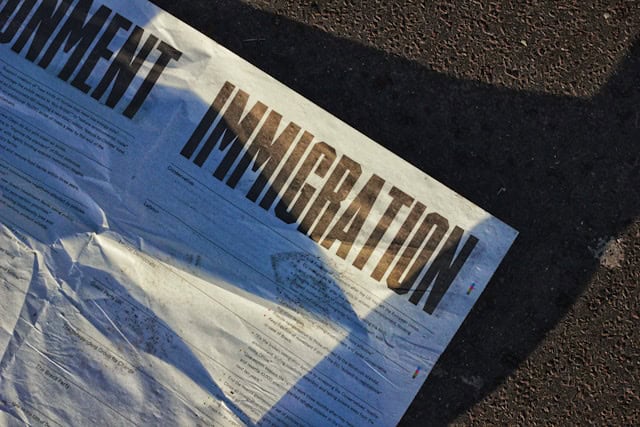
For many immigrant families, the hardest part of the immigration process is not the paperwork. It is the waiting time. Months or even years can pass while applications sit in government systems, interviews are scheduled, and decisions remain pending.
During that time, families build lives around the assumption that the rules they applied under will remain in place. When immigration policy changes suddenly, that assumption collapses.
A program pause, a new enforcement directive, or a political decision can upend plans that were already in motion. These shifts rarely affect abstract numbers alone. They affect real people who believed they were following the law and doing everything right.
Immigration Systems Are Built on Long Timelines
Most immigration pathways are slow by design, and the system is now under historic strain. Family-based visas, employment sponsorships, asylum claims, and diversity lottery applications all pass through multiple agencies and review stages. Applicants submit extensive forms, wait for background checks, respond to requests for evidence, and attend interviews that may be scheduled years later.
By the second quarter of fiscal year 2025, the green card backlog had reached roughly 11.3 million pending cases, according to USCIS. It is the largest caseload in U.S. immigration history. That volume turns already lengthy processes into prolonged periods of uncertainty.
During this time, families make life-altering decisions. They sign leases, enroll children in school, leave jobs, and invest savings into relocation and legal fees. Because these timelines are so long, stability matters. When policies change mid-process, the issue is not just a delay. It is the sudden uncertainty over whether the original legal path still exists.
What Happens When a Program Is Paused Mid-Process
A recent example illustrates this problem clearly. After a high-profile national incident, the federal government paused the Diversity Visa, commonly known as the green card lottery. Among those affected were individuals living in Murfreesboro, Tennessee, who had already been selected through the lottery and were preparing for the next steps.
Their experience underscores a recurring reality in immigration law: being selected or deemed eligible does not always guarantee that the process will reach completion.
When a program is paused, applicants are often left in limbo. Government agencies may not immediately clarify whether pending cases will move forward, remain frozen, or be canceled entirely.
This uncertainty can spill into other areas of life. For example, immigrants dealing with unrelated legal issues such as workplace injuries, car accidents, or housing disputes may hesitate to take action. They often fear that legal exposure could affect their immigration status.
In situations like these, individuals like those mentioned in the Murfreesboro example can turn to lawyers in Murfreesboro, TN, for guidance. These non-immigration matters can still carry serious legal and financial consequences.
Hudson, Reed & Christiansen, PLLC, notes that qualified counsel can help injured individuals understand their rights and pursue claims safely. They can also help avoid missteps that could create additional legal complications during an already uncertain period.
Legal Uncertainty Affects More Than Immigration Status
The consequences of sudden policy shifts extend well beyond immigration paperwork. Employment authorization can be delayed or revoked, cutting off household income with little warning. Travel plans are often disrupted, especially for families afraid to leave the country while their status is unresolved.
Children can also be affected in quieter but lasting ways. Recent reporting shows that increased immigration enforcement and uncertainty are linked to higher stress levels and trauma-related challenges among students.
School attendance can also drop, even when the children affected are U.S. citizens. When a parent’s legal status feels unstable, school quickly becomes another source of anxiety rather than stability.
In some situations, families may also avoid seeking medical care or reporting crimes because they are unsure how policy changes affect their rights. Emotional strain compounds these practical concerns.
Families who thought they were nearing the end of a long process may suddenly feel pushed back to the beginning, without clear explanations or timelines. That uncertainty can weigh heavily on mental health, relationships, and everyday decision-making.
Why Policy Shifts Often Target Programs, Not Individuals
From a government perspective, broad programs are easier to pause or revise than individual cases. Policy decisions are often framed around security concerns, administrative efficiency, or shifting political priorities. Recent reporting illustrates how sweeping these actions can be.
A federal policy freeze halted immigration applications from 19 non-European countries. The decision stopped green card and citizenship processing even for applicants who had already submitted documentation and were waiting for scheduled interviews.
However, these decisions rarely account for the reality that many applicants have already passed background checks and complied with legal requirements. Many have also invested significant time, money, and personal resources into the process.
This disconnect is especially visible in programs like the diversity lottery, where selection is only one step in a longer vetting process. When a program is paused after selection, applicants are left questioning whether their compliance still matters. While the law may eventually provide clarity, answers are often slow and far from reassuring.
The Importance of Understanding Individual Legal Options
When immigration policy changes, families often assume they must simply wait. In reality, waiting without guidance can be risky.
Some applicants may have alternative pathways available, such as family-based petitions, employment sponsorship, or status adjustments that were not previously considered. Others may need to take specific actions to preserve their place in the system, respond to agency notices, or avoid falling out of status.
This is where individualized legal advice becomes critical. Immigration law is highly fact-specific, and policy changes do not affect all cases equally. A pause that halts one category of applications may not apply to another. Understanding how a policy shift interacts with a specific case requires careful analysis of timelines, filings, and current status.
FAQs
Is there an immigration crisis in the USA?
Many experts describe the current situation as an immigration crisis due to record backlogs, policy instability, and strained processing systems. Millions of cases remain pending across the immigration system. Frequent rule changes and enforcement shifts have made legal immigration slower and more uncertain for families already in the process.
Why is USCIS so backlogged?
USCIS is backlogged because application volumes have surged while staffing and processing capacity have not kept pace. Pandemic-era shutdowns, increased vetting requirements, frequent policy changes, and paper-heavy processes have slowed adjudications. As a result, millions of visa, green card, and citizenship cases remain pending.
Is it worth using an immigration lawyer?
For many applicants, using an immigration lawyer is worth it because immigration law is complex and constantly changing. A qualified lawyer can help avoid costly mistakes, identify alternative options, and protect your rights when delays, policy shifts, or unexpected issues arise.
All in all, one of the hardest lessons for immigrant families is that compliance alone does not guarantee predictability. Even well-established programs can change with little notice.
While no one can control policy decisions, families can take steps to reduce risk. Maintaining complete records, staying informed about case status, and seeking legal guidance early can help families respond more effectively when changes occur.
Sudden immigration policy shifts are disruptive precisely because they affect people who are already doing everything they were asked to do. Recognizing this reality is the first step toward navigating it.
With accurate information and appropriate legal support, families can move from uncertainty toward informed decision-making, even when the system itself feels unstable.