
Core Asset Protection Strategies for Your Newfound Wealth

Coming into a large sum of money, whether from an inheritance, a settlement, or selling a business, isn’t the finish line—it’s the starting gun for every predator and bad-faith actor in a hundred-mile radius. Suddenly, you have a target on your back. This isn’t a time for celebration; it’s a time for sober, strategic action. Ignoring the risks is like leaving a pile of cash on your front lawn and hoping for the best. We’re going to talk about how to build a fortress around that wealth before the siege begins.
We understand this can feel overwhelming. However, protecting your newfound wealth is a critical part of securing your future. It is also key to preserving your legacy. This guide will walk you through essential best practices for estate planning. We will show you how to implement robust defenses. These are vital for anyone facing sudden wealth.
We will cover:
- Foundational asset protection strategies: These are the immediate steps to reduce risk.
- Advanced trust-based protection: We will explore sophisticated tools for ultimate security.
- The Human Element: We will explore how informed decisions about individuals can help prevent future conflicts.
Our goal is to empower you to take command of your financial future. We will help you turn potential vulnerabilities into lasting security. This ensures your wealth serves you and your family for generations.
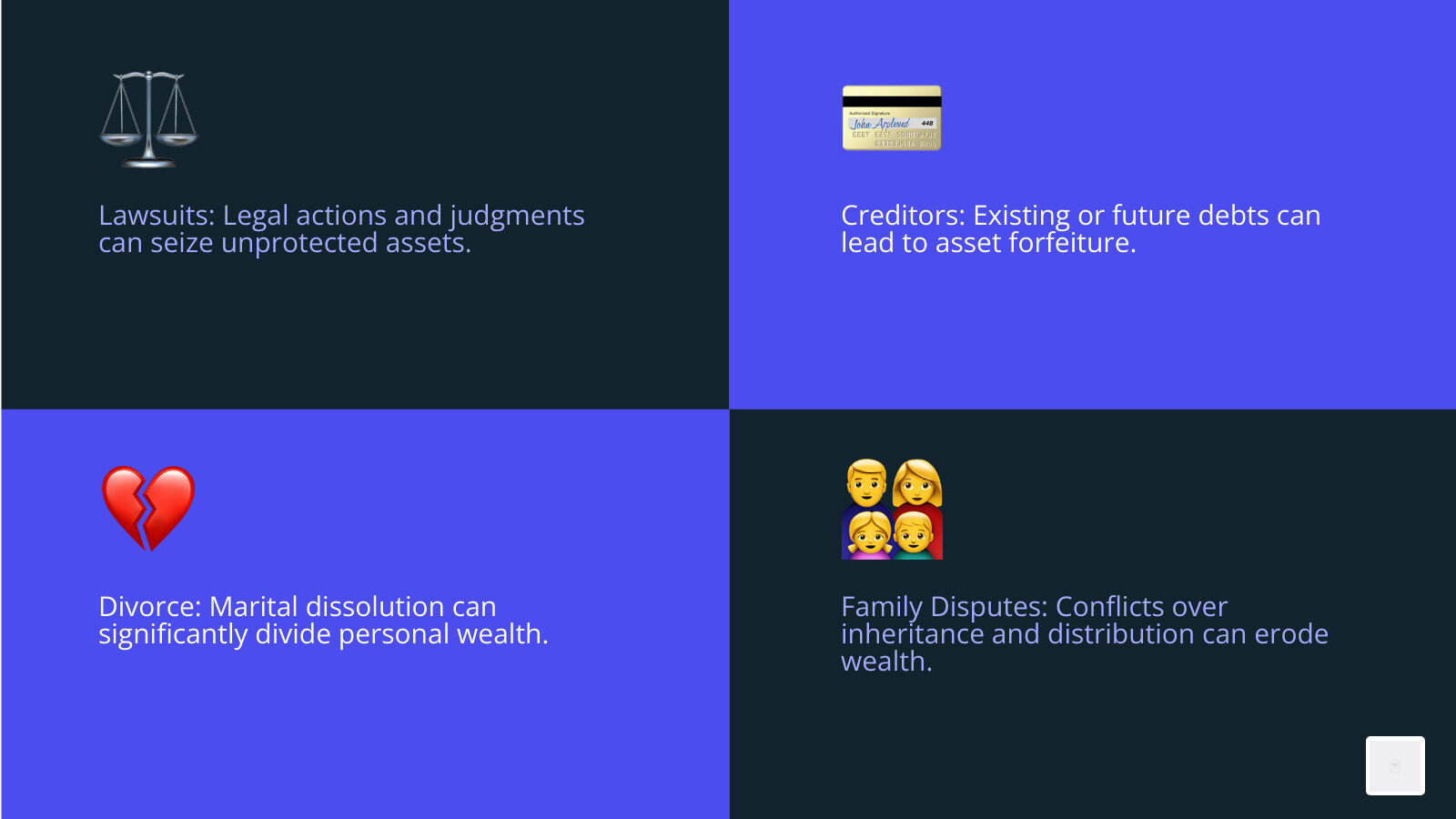
The first line of defense isn’t complicated, but it’s non-negotiable. These are the foundational moves you make to reduce your exposure immediately. Skipping these is like building a house with no foundation. We often see individuals who come into significant wealth overlook these crucial initial steps, assuming their assets are automatically safe. This oversight can leave them vulnerable to unexpected claims and disputes that could have been easily mitigated with a proactive approach.
Foundational Asset Protection Strategies to Implement Immediately
When you receive a substantial sum, the immediate priority is to create layers of protection around it. These strategies are often straightforward to implement but offer significant benefits in safeguarding your financial future.
- Umbrella Insurance: This is an often-underestimated yet highly effective layer of protection. An umbrella policy provides additional liability coverage beyond the limits of your homeowners, auto, and other insurance policies. If you face a lawsuit that exceeds the coverage of your primary policies, your umbrella insurance kicks in, protecting your personal assets from being seized to satisfy a judgment. It’s an affordable way to add millions in liability coverage, shielding your wealth from unforeseen accidents or claims.
- Asset Titling: The way your assets are owned can significantly impact their vulnerability. Simply put, asset titling refers to the legal ownership of your property. For instance, holding assets in joint tenancy with rights of survivorship (JTWROS) means that upon the death of one owner, the assets automatically pass to the surviving owner, often bypassing the need for probate. However, this also means the assets are exposed to the creditors of both owners. For real estate, considering tenancy by the entirety (available in some states for married couples) can offer creditor protection against one spouse’s individual debts. Carefully reviewing and adjusting the titles of your bank accounts, investment portfolios, and real estate is a fundamental step in asset protection.
- Entity Formation (LLCs and Corporations): For business owners or those with investment properties, establishing legal entities such as Limited Liability Companies (LLCs) or corporations is crucial. These entities create a legal barrier between your personal assets and your business liabilities. If your business faces a lawsuit, the creditors can typically only pursue the assets held within the LLC or corporation, leaving your personal wealth (home, savings, personal investments) protected. This is a crucial distinction for entrepreneurs and investors who want to distinguish between their professional risks and their personal finances.
- Homestead Exemption (Arizona Homestead): If you own a home, understanding your state’s homestead exemption is vital. In Arizona, for example, the homestead exemption protects a significant portion of your home’s equity from creditors, typically up to $400,000. This means that if you face a judgment, creditors generally cannot force the sale of your primary residence to satisfy the debt, up to that protected amount. While this doesn’t protect against all debts (like mortgages or taxes on the property), it provides a substantial shield for your most significant personal asset. We advise clients to ensure their homestead declaration is filed correctly to take full advantage of this protection.
Here’s a list of basic protection steps we recommend implementing immediately:
- Review and update all insurance policies, especially liability coverage.
- Consult with an attorney to analyze and adjust asset titling for all significant holdings.
- Establish appropriate business entities for any entrepreneurial ventures or investment properties.
- Verify your homestead exemption status and ensure it’s correctly applied to your primary residence.
- Create or update your foundational estate planning documents, such as a will and powers of attorney.
Aligning Your Plan with Your Goals
A robust asset protection plan isn’t a random collection of legal tools; it’s a cohesive system custom to your specific situation. These Sudden Wealth Protection strategies must be tailored to your particular assets, family dynamics, and long-term objectives. One size fits no one. For instance, a young professional with a growing business will have different needs than a retiree inheriting a large sum. The plan must reflect your unique circumstances, including your risk tolerance, family structure, charitable intentions, and desires for legacy.
It’s also important to recognize that estate planning is not a one-time event. It’s an ongoing process that evolves with your life. Major life events—marriage, divorce, the birth of children or grandchildren, significant career changes, or new investments—should all prompt a review of your existing plan. The goal is to create a dynamic strategy that adapts to your changing needs while consistently safeguarding your wealth. This initial phase of planning is where we lay the groundwork, ensuring that every piece of your financial puzzle works together to protect what you’ve acquired.
Building Your Fortress: Advanced Trust-Based Protection
 Insurance and basic entities are the perimeter fence. For absolute security against serious threats, you need to move your most valuable assets into a structure designed for combat. This is where sophisticated trusts come in. While a simple will is a crucial component of any estate plan, it primarily dictates how assets are distributed after death and typically requires a probate process. Advanced trusts, however, can provide robust protection during your lifetime, manage assets in case of incapacity, and ensure a seamless, private transfer of wealth to your heirs, often bypassing the public and potentially costly probate court.
Why a Simple Revocable Trust Isn’t Enough for Asset Protection
Many individuals start their estate planning journey with a Revocable Living Trust. This is an excellent tool for specific purposes, but it is essential to understand its limitations, especially when asset protection is a primary concern.
- Revocable Living Trusts: A revocable living trust allows you, as the grantor, to maintain complete control over your assets during your lifetime. You can modify, amend, or even revoke the trust at any time. This flexibility is its greatest strength, but also its greatest weakness from an asset protection standpoint.
- Probate Avoidance: One of the main benefits of a revocable trust is that assets appropriately titled in the trust can avoid probate upon your death. This saves time, money, and maintains privacy, as probate is a public process.
- Creditor Access: Because you retain complete control over the assets in a revocable trust, they are generally not protected from your creditors. If you are sued, a creditor can typically reach the assets held within your revocable trust. The legal principle is that if you can access the assets, so can your creditors.
- Control vs. Protection: This highlights a fundamental trade-off in asset protection. The more control you retain over your assets, the less protection they generally have from creditors. Conversely, the more protection you desire, the more power you may need to relinquish.
- Common Misconceptions: A common misconception is that simply having a revocable trust makes your assets immune to lawsuits. While it offers excellent benefits for estate administration and continuity planning, it does not provide the robust creditor and lawsuit protection that more advanced, irrevocable trusts can offer.
Advanced Asset Protection Strategies: The Asset Vault Trust
 For those seeking a higher level of protection, particularly after coming into significant wealth, advanced trust structures are indispensable. These are not off-the-shelf solutions but highly customized legal instruments designed to withstand serious challenges.
- Asset Vault Trust (or similar Irrevocable Trusts): This is where the concept of a “fortress” truly comes into play. An Asset Vault Trust, or other forms of Irrevocable Trusts, are designed to separate your assets from your personal ownership. Once assets are transferred into an irrevocable trust, they are no longer considered yours for liability purposes. This means they are generally shielded from future creditors, lawsuits, and other claims against you personally. We often refer to these as a 541 Trust, named after the IRS tax form used for them.
- Domestic Asset Protection Trusts (DAPTs): Some states, such as Arizona, permit the creation of Domestic Asset Protection Trusts (DAPTs). These are a specific type of irrevocable trust that will enable you, as the grantor, to retain some limited beneficial interest in the trust assets while still providing significant creditor protection. This is a powerful tool, but it requires careful structuring and adherence to state laws and regulations.
- Lawsuit Protection & Creditor Protection: The primary goal of these advanced trusts is to create a legal barrier. If you are ever sued or if future creditors come knocking, the assets held within a properly structured irrevocable trust are typically beyond their reach. This is because you have legally relinquished ownership, even if you are a beneficiary of the property.
- Separating Assets from Personal Liability: This separation is the cornerstone of robust asset protection. It ensures that your hard-earned wealth, especially a recent windfall, is not jeopardized by unforeseen personal or professional liabilities.
This isn’t a DIY project—it’s a specialized tool for shielding your wealth from your own future potential liabilities. The creation of such trusts involves complex legal and tax considerations. It is imperative to work with experienced estate planning attorneys who specialize in asset protection. These sophisticated plans are typically structured on a flat-fee basis. For a single individual, a comprehensive plan may cost approximately $4,200, while a plan for a married couple, which often requires more intricate planning, could be around $6,500. This investment ensures your assets are protected by a structure designed to withstand legal challenges and preserve your legacy for generations.
The Human Element: Choosing People and Preventing Conflict
Poor communication or the wrong people can undermine even the best legal structures. Choosing your fiduciaries—the people who will manage your affairs—is as critical as choosing the right strategy. Even the most carefully crafted trust can fail if the individuals entrusted with its administration are ill-suited or uninformed. This human element is often overlooked but is absolutely foundational to the long-term success of your estate plan.
Selecting Your Trustee and Other Key Roles
Your estate plan will designate several key individuals to act on your behalf, both during your lifetime and after your passing. Their roles come with significant responsibilities and require careful consideration.
- Trustee: The trustee is responsible for managing the assets held within a trust in accordance with its terms and for the benefit of the beneficiaries. This role requires financial acumen, impartiality, and a deep understanding of fiduciary duties. A trustee must act solely in the best interest of the beneficiaries, avoid conflicts of interest, and manage assets prudently. For complex trusts or significant wealth, many choose a professional trustee (such as a trust company) or a co-trustee arrangement involving both a family member and a professional. This ensures expertise, objectivity, and continuity of care.
- Executor (or Personal Representative): Named in your will, the executor is responsible for gathering your assets, paying debts and taxes, and distributing the remaining assets according to your will. This role can be time-consuming and involves significant administrative and legal responsibilities. Choosing someone organized, trustworthy, and capable of handling financial matters is crucial.
- Power of Attorney (POA) Agent: This individual is authorized to make financial decisions on your behalf if you become incapacitated. A Durable Power of Attorney ensures this authority continues even if you are unable to make decisions yourself. The agent should be someone you trust implicitly, who understands your financial philosophy, and who is capable of managing your affairs responsibly.
- Fiduciary Duties: All these roles entail fiduciary duties, which are a legal and ethical obligation to act in another’s best interest. This is a high standard of care and requires diligence, loyalty, and prudence.
- Responsibility and Objectivity: When selecting these individuals, prioritize their responsibility, integrity, and ability to act objectively, even when faced with complex family dynamics. While it may seem natural to choose a family member, consider whether they possess the necessary skills, time, and emotional distance to fulfill the role effectively.
- Avoiding Family Conflict: Choosing the wrong person, or someone unwilling or unable to fulfill their responsibilities, can lead to significant family strife and costly legal battles. It’s often wise to name successor fiduciaries in case your primary choice is unable to serve.
- Professional Fiduciaries: For larger or more complex estates, or when family dynamics are particularly challenging, engaging a professional fiduciary can be an excellent solution. They bring expertise, impartiality, and continuity, often alleviating the burden and potential for conflict among family members.
Communicating Your Plan to Avoid Future Bloodshed
Once your legal documents are in place and your fiduciaries are chosen, the next critical step is communication. Many well-intentioned estate plans fail due to a lack of transparency and understanding among family members.
- Family Meetings: While it might seem daunting, a family meeting to discuss the general outline of your estate plan can be invaluable. This isn’t about revealing every financial detail, but rather explaining your intentions, the roles of those involved, and the reasons behind certain decisions.
- Explaining the “Why”: People are often more accepting of decisions when they understand the rationale behind them. Explain your goals for asset protection, legacy, and family harmony. This can preempt misunderstandings and resentment. For example, if you’ve chosen an irrevocable trust for asset protection, explain that this is to safeguard the family’s future inheritance from external threats, not to disinherit anyone.
- Setting Expectations: Clearly communicate who will be responsible for what, and what their duties entail. Ensure your chosen fiduciaries are willing and able to serve, and that they understand the scope of their responsibilities.
- Letter of Intent: While not legally binding, a letter of intent can provide invaluable guidance to your fiduciaries and beneficiaries. It can express your wishes for funeral arrangements, explain the reasoning behind certain distributions, offer advice, or provide instructions for managing specific assets or digital accounts. This personal touch can significantly reduce ambiguity and emotional distress for your loved ones.
- Preventing Trust Litigation and Reducing Family Disputes: Proactive communication and clear documentation are your best defenses against future disputes. Ambiguity, perceived unfairness, or a lack of understanding can easily lead to costly and emotionally draining trust litigation. By being open and transparent, you empower your family and fiduciaries to execute your wishes smoothly, preserving both your wealth and family harmony.
Frequently Asked Questions about Asset Protection
Is asset protection legal?
Yes. Legitimate asset protection is the proactive, legal arrangement of your financial affairs to guard against potential future creditors, lawsuits, and other threats. It is not about hiding assets, evading taxes, or defrauding existing creditors, which is illegal. We operate strictly within the bounds of the law, using established legal tools and principles to safeguard wealth. The goal is to build a robust defense before any threats emerge, ensuring your assets are structured to comply with all regulations while providing maximum protection.
When is it too late to start protecting my assets?
The moment a claim or liability arises, your options become severely limited. Adequate asset protection must be implemented before a threat appears on the horizon. Attempting to transfer assets after being sued is often considered a fraudulent transfer, which can result in severe legal penalties, including criminal charges in some cases. The legal system is designed to prevent debtors from unfairly shielding assets from existing creditors. Therefore, the best time to implement asset protection strategies is when you have no known creditors or pending lawsuits. This proactive approach ensures the strategies are legally sound and practical.
Can I utilize these strategies to safeguard my assets during a divorce?
This is a complex area. Asset protection strategies implemented long before a marriage may offer some protection. However, assets acquired during the marriage are often considered marital property, subject to equitable distribution in the event of divorce, regardless of how they are titled or placed in certain trusts. Prenuptial or postnuptial agreements are typically the most direct tools for addressing this, as they allow couples to define how assets will be divided in the event of a divorce. Even with these agreements, the enforceability can depend on state law and specific circumstances. It’s crucial to consult with an attorney specializing in both asset protection and family law for comprehensive advice on this particular concern.
Conclusion: Take Command of Your Legacy
You have a choice. You can leave your newfound wealth exposed and become another cautionary tale, or you can take decisive action. Building a proper asset protection plan is about taking command, eliminating vulnerabilities, and ensuring your wealth serves you and your family for generations. It’s the difference between being a target and being a fortress.
From establishing foundational protections, such as umbrella insurance and proper asset titling, to deploying advanced strategies like irrevocable trusts, every step you take fortifies your financial future. Equally important is the human element: carefully selecting your fiduciaries and communicating your intentions clearly to prevent family disputes and ensure your legacy is honored.
If you’re ready to secure your future and protect what you’ve worked so hard to build, the time to act is now. Schedule a consultation to fortify your assets and gain the peace of mind that comes with a well-protected legacy.