
The legality of a traffic stop is one of the most important factors in a DWI case. If the officer did not have reasonable suspicion to pull you over, any subsequent evidence may be inadmissible in court. This is why it’s essential to hire a DWI defense attorney who can assess whether the traffic stop was lawful.
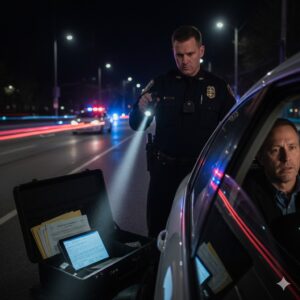
By thoroughly reviewing the circumstances and questioning the actions of law enforcement, an experienced attorney can challenge the legitimacy of the stop, potentially leading to a dismissal of charges.
Foundation of a DWI Case
Every DWI case begins with a traffic stop. Officers must always have at least a relatively reasonable suspicion before stopping a vehicle. If they don’t have a good enough reason for the stop, any evidence garnered from the stop may be deemed non-admissible. This indispensable requirement is a bulwark against wrongful searches.
Reasonable Suspicion Requirement
Demands are placed on officers not to stop cars just on suspicion or a loose hunch. Rather, they need to witness particular facts or conduct indicating a potential violation. For example, not staying in the same lane, not using your turn signal, or running a stoplight can give law enforcement reasonable suspicion to stop you. Judges scrutinize whether these reasons establish the legal threshold of reasonable suspicion.
Consequences of an Unlawful Stop
Any evidence obtained immediately after may not be used at a trial if a judge believes there was no proper justification for the original stop. This includes everything from field sobriety test results to the air samples that officers have requested the individual to provide for a breathalyzer, as well as the note-taking and observations made by the officer at the scene. Without these particulars, the state’s case quite frequently weakens dramatically, and charges get dismissed.
Dashcam and Bodycam Footage and Their Implications
DWI traffic stop reviews increasingly involve video recordings. Dashcam or body-camera footage can verify or dispute an officer’s story. Listening to these recordings helps to verify that the officer had reasonable and probable grounds for stopping the vehicle. Footage may also capture procedural errors or omissions leading up to the encounter.
Impact of Officer Conduct
A lot also depends on the manner in which a cop acts while stopping you tomorrow. This affects not only the judicial process but also public trust, as civility, professionalism, and protocol are key components of both. Hot-headed comments or threatening talk can also cast doubt on the validity of the stop. In determining whether evidence is admissible, courts may focus on the behavior of the officer.
Challenging the Legality in Court
Defense tactics often center on the context of the initial stop. Lawyers analyze police reports, statements, and videos for any procedural errors. Should there be any discrepancies or a lack of legitimate reason, the defense can file motions for suppression. From there, courts determine whether the stop satisfied constitutional or statutory mandates, influencing the course of the entire case.
Judicial Review and Decision-Making
It is up to judges to determine whether law enforcement acted appropriately. They assess all available evidence, including testimony and audio. If the evidence shows that the officer did not have a reason to stop the vehicle, the judge may suppress evidence or dismiss the charges altogether.
Protecting Constitutional Rights
The protections against unlawful searches and seizures associated with traffic stops are the necessary constitutional protections of liberty. Everyone who occupies a vehicle has the right to liberty against arbitrary stops and searches. The enforcement of these protections is the correct middle ground between public safety and the protection of personal liberties. That said, the legal fallout from improper stops further illustrates the significance of these fundamental rights.
Importance for Defendants
The legality of the traffic stop that resulted in a DWI charge significantly impacts those facing such charges. If successful, challenges can also result in lower penalties or even dismissal of the charges. Thus, this subject matter is the number one consideration in many DWI defense cases.
Building a Strong Defense
A careful analysis of how the stop happened is always the first step to an effective defense. It is not the clarity of the decision or reasoning; it is the lack of clarity that the attorneys are looking for, the lack of a clear path or any steps that may win a motion for the attorneys. Mistakes made by law enforcement can build a stronger defense case to enforce the rights of the accused.
Conclusion
At the crux of a strong DWI defense is whether the traffic stop itself was legal. All those lo-fi details—the officer spotting the suspect, interacting with the suspect—have consequences. Following appropriate legal processes helps facilitate an equitable result and protects important constitutional rights. Concentrating on this essential matter provides drunk driving defendants with a basis for a better defense.